
Snowflake Architecture for the Enterprise: Designing a Scalable, Cost-Efficient Data Platform
A comprehensive guide to designing enterprise Snowflake architectures with multi-warehouse strategies, bronze/silver/gold data layers, data mesh principles, and security best practices.
Designing a Snowflake architecture that scales with your organization requires more than just creating databases and warehouses. It demands a thoughtful approach to compute isolation, data organization, security, and governance. This guide presents the architectural patterns we've implemented for enterprise clients across real estate, media, and financial services.
Snowflake's Three-Layer Architecture
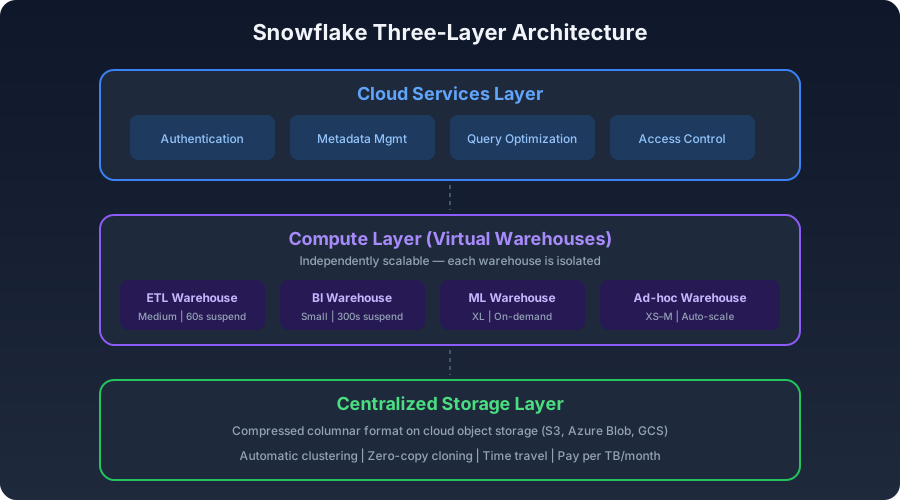
Snowflake's architecture separates three critical layers: Cloud Services (authentication, metadata management, query optimization, access control), Compute (virtual warehouses that can be independently scaled), and Storage (centralized, compressed, columnar storage on cloud object storage). This separation is the foundation of Snowflake's flexibility. Understanding it deeply is essential for designing architectures that maximize performance while minimizing cost.
Multi-Warehouse Strategy
A single warehouse for all workloads is the most common architectural mistake. Different workloads have different compute requirements, SLAs, and cost profiles. We recommend separate warehouses for: ETL/ELT pipelines (scheduled, can tolerate queuing), BI/reporting (interactive, needs fast response times), data science/ML (bursty, needs large compute for short periods), and ad-hoc queries (unpredictable, needs auto-scaling). Each warehouse should be independently sized, have its own auto-suspend policy, and be assigned its own resource monitor.
Bronze/Silver/Gold Data Organization
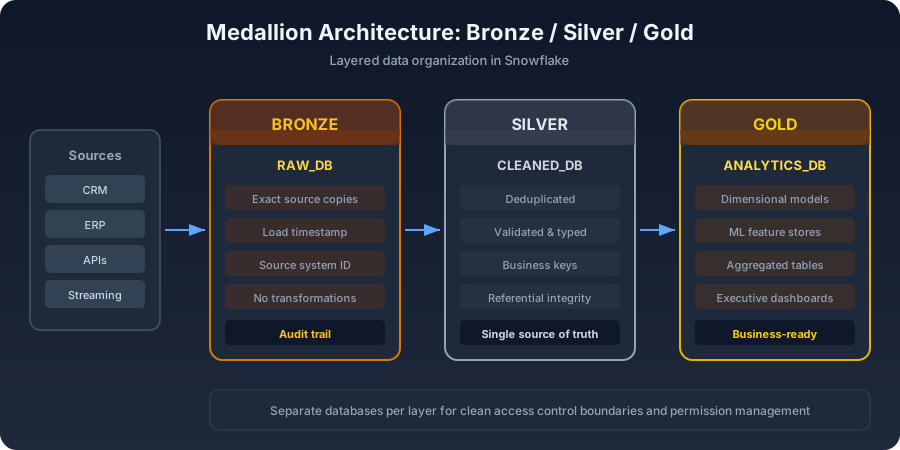
We organize enterprise Snowflake environments using a medallion architecture with three layers. Bronze (Raw): exact copies of source data with metadata columns for load timestamp and source system. No transformations — this is your audit trail and reprocessing safety net. Silver (Cleaned): deduplicated, validated, and standardized data with consistent naming conventions, data types, and null handling. Business keys are established and referential integrity is enforced. Gold (Business): business-ready datasets optimized for specific use cases — dimensional models for BI, feature stores for ML, aggregated tables for executive dashboards.
We implement this as separate databases (e.g., RAW_DB, CLEANED_DB, ANALYTICS_DB) rather than schemas within a single database. This provides cleaner access control boundaries and makes it easier to manage permissions at the database level.
Data Mesh on Snowflake
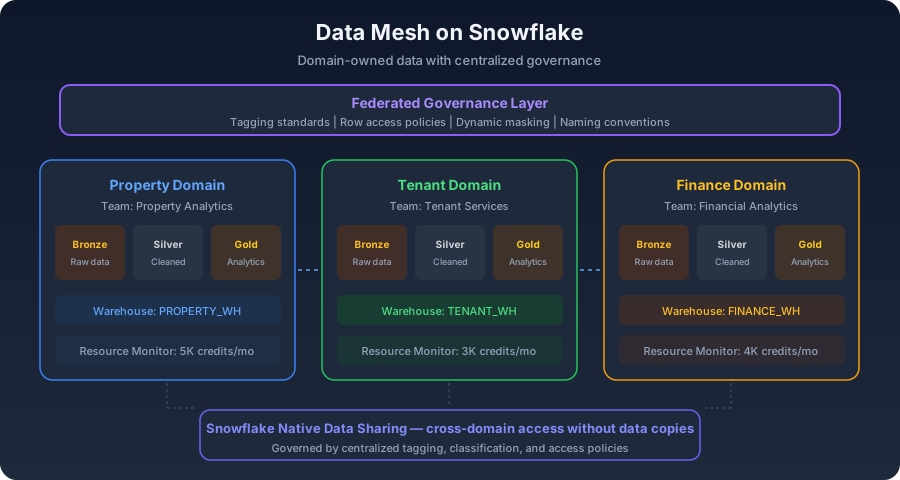
For large organizations with multiple data-producing teams, we implement data mesh principles on Snowflake. Each domain team gets their own database(s) and warehouse(s), with shared governance policies enforced through Snowflake's access control. The key components are: domain-owned databases where each team manages their own bronze/silver/gold layers, data sharing using Snowflake's native data sharing for cross-domain access without copying data, a central catalog using Snowflake's data classification and tagging to maintain discoverability, and governance guardrails implemented through row access policies, dynamic data masking, and object tagging.
Security Architecture
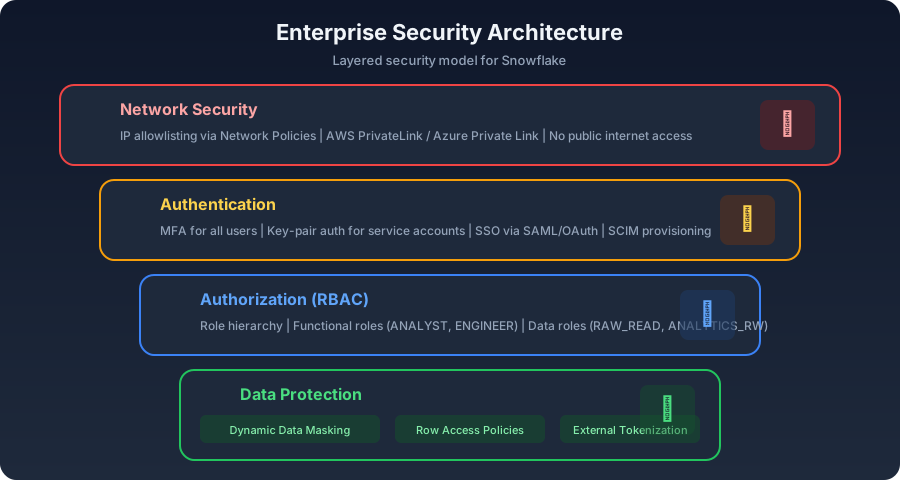
Enterprise Snowflake security should be layered. Network security: use Snowflake's network policies to restrict access by IP range, and enable private connectivity (AWS PrivateLink, Azure Private Link) for production environments. Authentication: enforce MFA for all human users, use key-pair authentication for service accounts, and integrate with your enterprise SSO via SAML or OAuth. Authorization: implement role-based access control (RBAC) with a role hierarchy that mirrors your organization. We typically create functional roles (e.g., ANALYST, ENGINEER, ADMIN) and data access roles (e.g., RAW_READ, ANALYTICS_READ_WRITE) and compose them. Data protection: use dynamic data masking for PII columns, row access policies for multi-tenant data, and external tokenization for highly sensitive data.
Reference Architecture: Real Estate Analytics
For a leading North American commercial real estate firm, we designed an architecture with: separate databases for property data, tenant data, financial data, and market data (bronze/silver/gold in each), dedicated warehouses for daily ETL (Medium, auto-suspend 60s), analyst queries (Small, auto-suspend 300s), and quarterly reporting (Large, spun up on-demand), dynamic data masking on tenant PII columns with row access policies limiting property managers to their portfolio, and zero-copy clones for the development team, refreshed nightly from production.
Reference Architecture: Media and Entertainment
For a major media and entertainment conglomerate, the architecture included: a content performance database ingesting viewership data from multiple platforms, an advertising analytics database with near-real-time ad impression and revenue data, a content recommendation feature store feeding ML models, multi-cluster warehouses for concurrent BI access during peak business hours, and cross-database data sharing between the content team and advertising team without data duplication.
Designing for Scale
The architectures that age well share common traits: they separate concerns (compute, storage, access) from the start, they implement naming conventions and tagging standards that make the environment self-documenting, they automate provisioning using infrastructure-as-code (Terraform or Snowflake's own Snowflake CLI), and they plan for cost governance from day one rather than retrofitting it after the first surprise bill.
As a Snowflake consulting partner, we've seen firsthand how the right architecture decisions made early can save organizations hundreds of thousands of dollars and months of rework. Whether you're building a new Snowflake environment or optimizing an existing one, investing in architecture pays dividends for years to come.
Frequently Asked Questions
How many warehouses should an enterprise Snowflake environment have?
There's no fixed number, but a good starting point is one warehouse per workload type: ETL, BI/reporting, data science, and ad-hoc queries. Large organizations may have 10–20+ warehouses as teams and use cases grow.
What is the medallion architecture in Snowflake?
The medallion architecture (bronze/silver/gold) organizes data into three layers: bronze for raw source data, silver for cleaned and validated data, and gold for business-ready analytics datasets. Each layer is typically implemented as a separate database in Snowflake.
How do you implement data mesh on Snowflake?
Data mesh on Snowflake uses domain-owned databases and warehouses, Snowflake's native data sharing for cross-domain access, centralized governance through tagging and access policies, and shared standards enforced through role-based access control.
Need help building your data platform?
At CData Consulting, we design, build, and operate modern data infrastructure for companies across North America. Whether you are planning a migration, optimizing costs, or building from scratch — let's talk.